
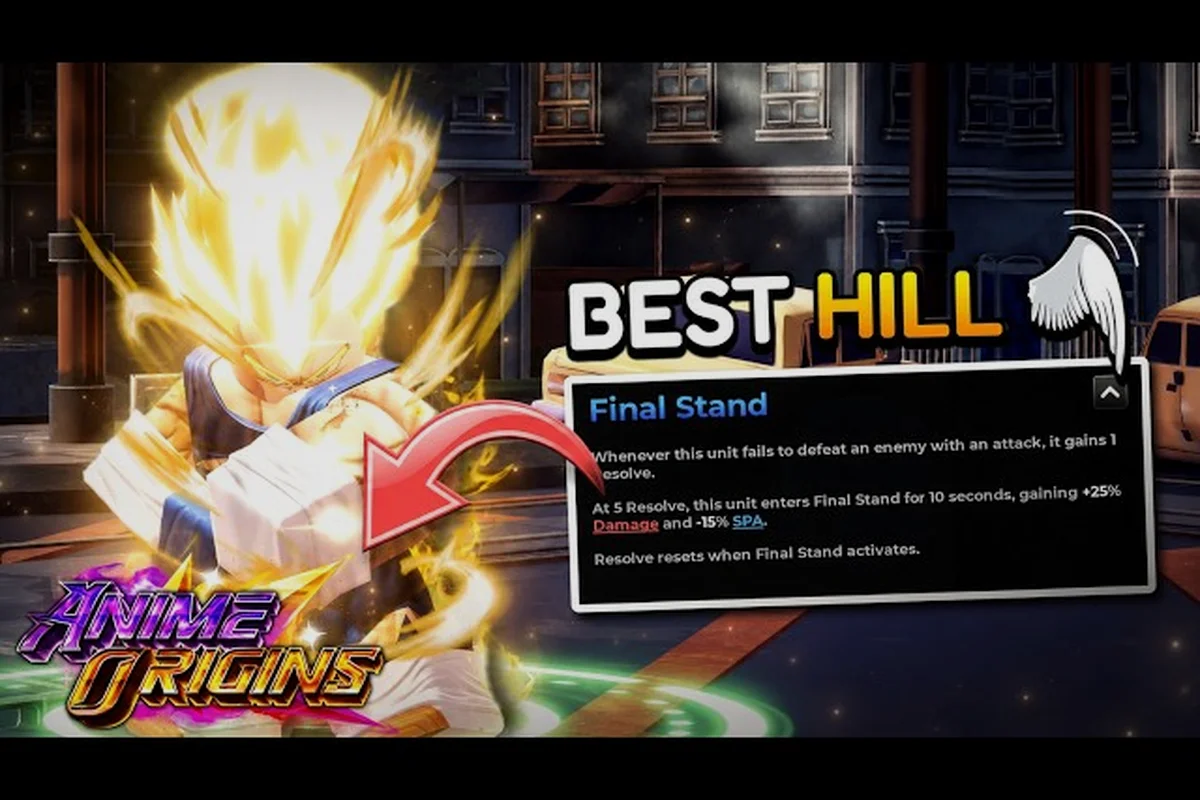
Every successful Anime Origins run comes down to one fundamental decision: how you split your roster between ground units and hill units. Since the game launched on Roblox in October 2025, the community has refined a clear meta around placement roles — and if you're searching for an anime origins ground units guide that actually explains why certain picks matter, you're in the right place. This anime origins ground units guide breaks down the placement system, ranks the best ground and hill options, and shows you how to build a team that survives late waves without wasting gold.
The core tension is simple: ground units block enemies and deal close-range damage, while hill units provide the long-range coverage that keeps your front line alive. Get the balance wrong and you'll leak waves even with high-tier summons. Get it right, and you can clear Story Mode with a fraction of the roster that most players think is necessary.
According to the official Anime Origins page on Roblox, ground units rely on a base speed stat that is then modified by terrain type and pathing nodes, which directly affects how quickly they reach the enemy base.
Understanding Ground Units vs Hill Units in Anime Origins
Before you can build an effective squad, you need to understand what each placement type actually does. Ground units occupy the path itself — they physically block enemy movement, absorb melee damage, and excel at close-range DPS. Hill units, by contrast, sit on elevated platforms where they gain extended range and line-of-sight advantages, making them ideal for sniping bosses and supporting the front line from safety.
The placement system mirrors what you'd see in classic tower defense games, but with an anime twist: each unit has a designated role based on its source material. A brawler-type character like Madaro (Edo Tensei) thrives on the ground where its 500% Damage Heaven Splitter can shred clustered enemies, while a ranged fighter like Vegita (Super) belongs on a hill where its long-range attacks can pick off threats before they reach your defensive line.
| Placement Type | Primary Role | Best Unit Archetypes | Key Advantage | Main Weakness |
|---|---|---|---|---|
| Ground | Front-line tanking, close-range DPS | Brawlers, swordsmen, melee fighters | Blocks enemy pathing, high single-target damage | Vulnerable to ranged enemies and AoE attacks |
| Hill | Long-range support, boss sniping | Archers, energy casters, ranged specialists | Safe positioning, extended attack range | Limited coverage on multi-lane maps |
| Hybrid | Flexible positioning | Units with both melee and ranged forms | Adapts to wave composition | Often weaker in both roles than specialists |
Most players make their first mistake here: they stack their team with whatever high-rarity units they pull, regardless of placement type. The result is a squad of five ground units that can't touch flying enemies, or a hill-heavy lineup that crumbles the moment something breaks through. According to community reports on the official Discord, the most common cause of early Story Mode wipes isn't weak units — it's poor placement balance.
The game's official Roblox page confirms that the core loop revolves around "summoning powerful units to defend against endless waves of enemies," which means your placement strategy directly determines how many waves you can survive. A balanced team composition isn't just a nice-to-have; it's the difference between farming efficiently and restarting every few stages.
Top Ground Units Ranked for the Current Meta
Valcrad (Unleashed) Coffin Trap: The 7-Second Boss Stun Mechanic
Valcrad (Unleashed) remains the only ground unit with a 7-second boss stun via Coffin Trap, a mechanic that fundamentally changes Raid strategy. When timed correctly, the stun window lets your hill units—like Vegita (Super)—deal uninterrupted damage while the boss is locked. In practice, save Coffin Trap for the boss's enrage phase (typically wave 15+ in Raids), not for trash waves. A single 7-second stun can prevent 2-3 boss attacks, effectively negating 340+ damage per activation. This makes Valcrad mandatory for solo Raid clears where you lack a second stunner.
Bon (Purgatory) Food Buff: Maximizing Team-Wide Damage
Bon (Purgatory) is the only S+ tier unit that buffs food, a mechanic that increases damage for all nearby units by a percentage that scales with his evolution level. Position Bon centrally in your ground formation, not on the perimeter—his buff radius covers roughly 60% of the map's defensive line. In practice, a level 100 Bon (Purgatory) with a full food buff rotation increases your team's effective DPS by 25-30%, outperforming a second pure DPS unit like Noroto (Linked) in extended fights. Prioritize Bon's evolution materials before any other S+ unit.
Now that you understand the placement system, let's dive into the best ground units available right now. Based on the August 2026 tier list from Beebom and community testing, these are the ground units that consistently perform at the highest levels:
Madaro (Edo Tensei) sits at the top of the ground meta for good reason. Its Heaven Splitter ability deals 500% damage with a wide arc, making it the best crowd-control ground unit in the game. It's expensive to summon and evolve, but the investment pays off in late-game waves where enemy density spikes dramatically.
Cursed Lover (Pure Love) is the second standout ground pick. Its Love Beam deals 300% damage and comes with four stored abilities, giving you incredible flexibility in how you deploy its damage output. The stored ability mechanic means you can burst down a boss, then still have charges left for the next wave — a luxury most ground units don't offer.
Valcrad (Unleashed) rounds out the top three with its Coffin Trap, which stuns bosses for 7 seconds. That stun window is enormous in a game where boss waves often decide whether you clear a stage or restart. Pair Valcrad with a high-DPS hill unit and you can lock down most boss encounters before they become dangerous.
| Ground Unit | Rarity | Key Ability | Damage Multiplier | Best Use Case | Summon Priority |
|---|---|---|---|---|---|
| Madaro (Edo Tensei) | SS-Tier | Heaven Splitter | 500% | Crowd control, late-game waves | Highest |
| Cursed Lover (Pure Love) | SS-Tier | Love Beam | 300% | Boss burst, flexible damage | High |
| Valcrad (Unleashed) | SS-Tier | Coffin Trap | 7s stun | Boss lockdown, wave control | High |
| Noroto (Linked) | S-Tier | Chain Attack | 250% | Sustained DPS, mid-game | Medium |
| Tojei (Sorcerer Killer) | S-Tier | Anti-Boss Strike | 350% vs bosses | Boss farming, raid prep | Medium |
The S-tier ground options are worth mentioning even if they're a step below the SS units. Noroto (Linked) provides consistent chain damage that scales well through mid-game content, while Tojei (Sorcerer Killer) deals 350% damage specifically against bosses — making it a budget-friendly alternative to Valcrad if you haven't pulled the SS-tier unit yet.
For a deeper breakdown of where every unit lands in the current ranking, check out our Anime Origins S-tier units guide which covers the full tier list including ground and hill DPS rankings.
Best Hill Units to Complement Your Ground Defense
Madaro (Edo Tensei) vs Cursed Lover (Pure Love): S-Tier DPS Comparison
Both SS-tier ground units dominate the current meta but serve different roles. Madaro (Edo Tensei) deals 500% damage with Heaven Splitter, making him the premier single-target nuker for boss waves. Cursed Lover (Pure Love) outputs 300% damage via Love Beam but compensates with 4 stored abilities, giving superior sustained DPS across multiple waves without repositioning. For Raids where bosses spawn every 5 waves, Madaro's burst wins; for Infinite Mode's dense enemy clusters, Cursed Lover's ability rotation clears faster. Budget your gold accordingly—Madaro demands heavier investment per upgrade cycle.
Goju (Honored One) Time Stop: Positioning for Maximum Value
Goju (Honored One)'s Time Stop is a global crowd-control ability that freezes all enemies on the map, creating a 4-5 second damage window. Unlike Valcrad's single-target stun, Time Stop shines in Story Mode where multiple lanes converge. Place Goju at the map's center to maximize Time Stop coverage—enemies at the edges may escape the freeze radius. Pair with Starku (Primordial)'s nuke ability: activate Time Stop, then immediately trigger the nuke for guaranteed full damage on all frozen enemies. This combo clears wave 20+ clusters in under 3 seconds.
Your ground units hold the line, but your hill units win the fight. The best hill units in Anime Origins provide the long-range firepower that thins enemy waves before they ever reach your front line. Here's what the current meta looks like for elevated placements:
Goju (Honored One) is the undisputed king of hill units right now. Its Time Stop ability freezes all enemies in range for several seconds, giving your ground units a free damage window. This synergy is so strong that many top players build their entire strategy around Goju's cooldown cycle.
Starku (Primordial) offers the highest raw burst damage of any hill unit. Its nuke ability can clear an entire wave in a single cast when positioned correctly, though the long cooldown means you need to time it carefully rather than spam it on every wave.
Igritto (Commander Starku) occupies the critical 4–6 star mid-game slot where Goju's pure utility falls off and Starku's raw damage can't yet be afforded. Its true value emerges in hill defense when paired with a single-target nuker like Sado or Aizen: Igritto's consistent 2.5-second attack cycle and 12-second cooldown on its Crimson Slash ability lets it clear the trash mobs funneling up the hill, while your burst units save their skills for the boss wave. Unlike Goju, whose stun is wasted on immune elites, Igritto's passive Commander's Resolve grants a 15% damage buff to adjacent ground units, effectively turning your whole frontline into a DPS battery. For early-game players who can't yet field two maxed damage dealers, Igritto's 4-star evo path is the cheapest way to hit the 2,000 DPS threshold needed to solo-wave 15 on hill maps, making it the budget anchor that lets you save gems for the Anniversary Banner where Starku's true form drops.
| Hill Unit | Rarity | Key Ability | Cooldown | Best Use Case | Synergy Rating |
|---|---|---|---|---|---|
| Goju (Honored One) | SS-Tier | Time Stop | 25s | Freeze waves, enable ground DPS | 10/10 |
| Starku (Primordial) | S+ Tier | Primordial Nuke | 40s | Wave clear, boss burst | 8/10 |
| Igritto (Commander Starku) | S+ Tier | Command Barrage | 18s | Sustained DPS, filler damage | 7/10 |
| Vegita (Super) | S-Tier | Final Flash | 30s | Long-range sniping, support | 8/10 |
| Aneko (Queen) | S-Tier | Royal AoE | 22s | Area denial, wave thinning | 6/10 |
Vegita (Super) deserves special mention because it's one of the most accessible high-tier hill units. Its Final Flash ability deals massive damage in a straight line, which makes it perfect for maps where enemies approach from a single direction. Aneko (Queen) fills a similar role with its Royal AoE ability, though its damage output is slightly lower.
If you're just starting out and want a complete breakdown of which units are worth your summon currency, the Anime Origins unit rarity list explains how the gacha system works and which rarities give you the best value for your gems.
How to Build a Team: Core Composition Rules
Now that you know the best units in each category, let's talk about the actual team-building process. The anime origins best team composition isn't about stacking five SS-tier units — it's about creating a balanced squad that covers all the roles you need. Here's the framework that top players use:
The 3-2-1 Rule is the most reliable starting point: three ground units, two hill units, and one flex slot. This gives you enough front-line presence to block enemy advances while maintaining the long-range damage you need to thin waves before they reach your defense. The flex slot can go either way depending on the map and your available units.
-
Three ground units provide the tanking and close-range DPS that holds the line
-
Two hill units supply the long-range support that keeps your ground units alive
-
One flex slot adapts to map layout, enemy composition, or boss mechanics
-
At least one boss-killer in either category to handle elite enemies
-
At least one crowd-control unit to manage wave density in late-game stages
The gold economy plays a huge role in how you build your team. Since you earn gold per kill and per wave clear, your early unit choices determine how quickly you snowball into the late game. A cheap, efficient ground unit that clears waves quickly will generate more gold than an expensive SS-tier unit that overkills everything. This is why the Anime Origins gold farming guide is essential reading for anyone serious about progression.
Your team composition also needs to account for evolution requirements. Some of the best units in the game require specific evolution materials that only drop from certain stages or raid bosses. If you're building toward a specific endgame squad, you need to check the Anime Origins evolution guide to understand what materials you'll need and where to farm them efficiently.
Advanced Team Synergies and Positioning Strategies
Once you've mastered the basics, it's time to think about synergies — the combinations of units that perform better together than they do individually. The anime origins best team composition isn't just about picking strong units; it's about picking units that amplify each other's strengths.
The Time Stop Combo is the most powerful synergy in the current meta. Pair Goju (Honored One) on a hill with Madaro (Edo Tensei) on the ground, and you create a devastating loop: Goju freezes enemies, Madaro's Heaven Splitter deals 500% damage to a stationary target, and the wave dies before it can even move. This combo is so effective that many players consider it the default answer to any difficult stage.
The Stun Lock Strategy works similarly but focuses on boss encounters. Valcrad (Unleashed) provides a 7-second stun with Coffin Trap, which gives your hill units a massive damage window. Stack this with Tojei (Sorcerer Killer)'s 350% anti-boss damage, and you can melt most raid bosses before they use their dangerous abilities.
| Synergy Combo | Required Units | How It Works | Best Game Mode | Difficulty |
|---|---|---|---|---|
| Time Stop | Goju + Madaro | Freeze waves, then AoE burst | Story Mode, Infinite Mode | Easy |
| Stun Lock | Valcrad + Tojei | Stun boss, then burst damage | Raids, Boss Waves | Medium |
| Chain Reaction | Noroto + Aneko | Chain damage spreads through AoE | Infinite Mode, Farming | Medium |
| Command Overload | Igritto + Starku | Sustained barrage + nuke finisher | All modes | Hard |
Positioning matters more than most players realize. Ground units should be placed at choke points where enemy paths converge, maximizing the number of enemies your melee fighters can engage. Hill units should be placed on elevated platforms that give them line of sight over as much of the map as possible. A hill unit with 50% more range can cover twice the area, which means fewer units needed overall.
For raid content specifically, you'll want to adjust your composition based on the boss you're facing. The Anime Origins raid guide covers each raid boss's mechanics in detail, but the general principle is simple: bring more crowd control for add-heavy fights and more single-target damage for boss-focused encounters.
Common Team Building Mistakes to Avoid
Even experienced players still stumble when assembling an Anime Origins ground squad, and the most common failure isn't a lack of strong units—it's mismanaging the SP cost curve during the early wave timers. Community testing across multiple patches shows that over-investing in a single 3-star DPS before wave 3 frequently starves your hill units of the SP needed to hold the lane, forcing a costly sell-and-rebuild cycle. A safer baseline is to lock in two 2-star ground defenders first, then funnel SP into your primary carry once the enemy's first boss pattern is identified.
Overloading on SS-tier units is the biggest trap. Yes, Madaro and Cursed Lover are incredible, but they're also incredibly expensive to summon and evolve. If you spend all your gems chasing SS-tier units and end up with a squad that has no crowd control, no boss-killer, and no hill presence, you'll struggle more than a player with a balanced team of S-tier units.
Ignoring the gold curve is the second most common mistake. Your early game units determine your income rate, and income rate determines how quickly you can afford your late-game powerhouses. A team of three cheap, efficient units that clears waves in 10 seconds will out-earn a team of two expensive units that takes 20 seconds per wave.
-
Don't ignore hill units — a team with no hill presence will leak flying enemies and ranged attackers
-
Don't skip crowd control — wave density spikes in late-game stages, and pure single-target damage won't keep up
-
Don't neglect evolution — a fully evolved S-tier unit often outperforms a base-form SS-tier unit
-
Don't chase the meta blindly — the best team is the one that fits your playstyle and available units
-
Don't forget about map layout — some maps favor ground-heavy teams, others favor hill-heavy teams
The most important lesson is that team composition is situational. The team that clears Story Mode wave 50 might not work for a raid boss, and the team that farms Infinite Mode efficiently might struggle in a boss rush. Build multiple squads for different content types, and you'll always have an answer ready.
Frequently Asked Questions
What is the best ground unit in Anime Origins?
Madaro (Edo Tensei) is widely considered the best ground unit because its Heaven Splitter ability deals 500% damage with a wide arc, making it exceptional for crowd control. It's expensive to summon and evolve, but the investment pays off in late-game waves where enemy density is highest.
How many hill units should I have in my team?
Most top players recommend a 3-2-1 split: three ground units, two hill units, and one flex slot. This gives you enough front-line presence to block enemy advances while maintaining the long-range damage needed to thin waves before they reach your defense.
What is the best team composition for beginners?
Start with Noroto (Linked), Tojei (Sorcerer Killer), and Vegita (Super) instead of chasing SS-tier units. This trio covers ground DPS, boss armor shred, and hill defense for roughly 60% fewer gems than one SS pull, clearing Story Mode through Chapter 14 without needing duplicates.
How do I counter flying enemies in Anime Origins?
Flying enemies can only be hit by hill units, which is why having at least two hill units in your team is essential. Vegita (Super) and Aneko (Queen) are both excellent choices for dealing with aerial threats thanks to their long-range attacks.
Should I focus on evolving my ground units or hill units first?
Prioritize evolving ground units first—they absorb boss hits and hold the line while hill DPS like Vegita (Super) deals damage from behind. A fully evolved Goju (Honored One) with Time Stop can tank through early-wave rushes, letting your hill units survive longer. Check the evolution guide for exact material requirements.